Half — Vegetables
Fill approximately half your plate with non-starchy vegetables. Mix colors and textures for greater variety and visual appeal.
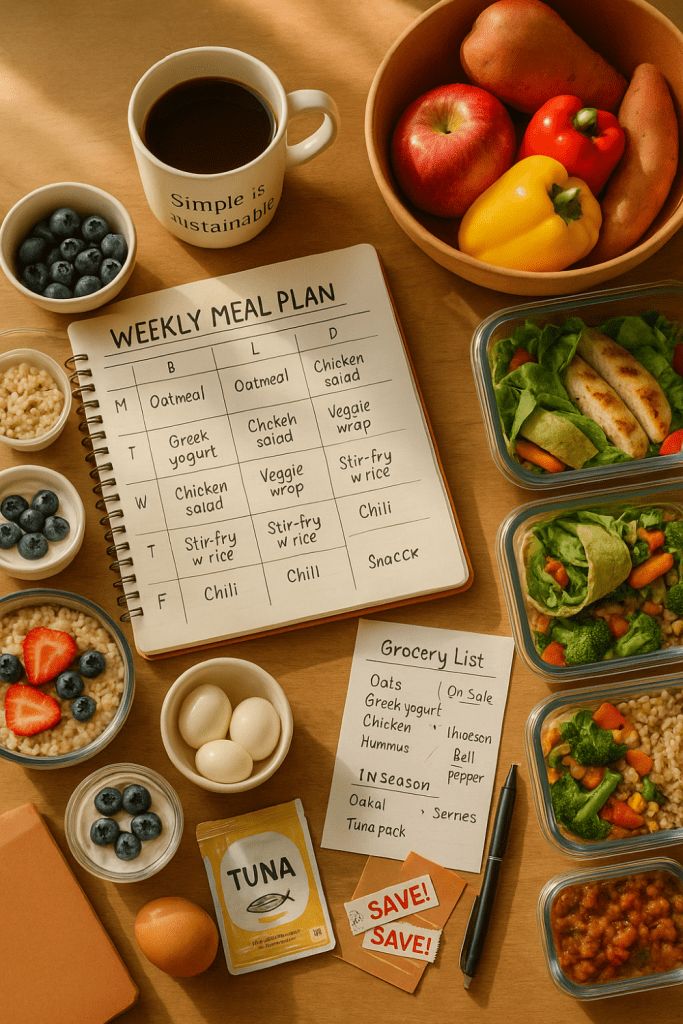
From plate composition to weekly prep calendars, these frameworks help you assemble satisfying meals without rigid recipe dependency.
Fill approximately half your plate with non-starchy vegetables. Mix colors and textures for greater variety and visual appeal.
Dedicate one quarter to whole grains or starchy vegetables. Brown rice, farro, sweet potato, and whole-wheat pasta are reliable choices.
The remaining quarter holds your protein source. Rotate between legumes, poultry, fish, eggs, and plant-based alternatives throughout the week.
Wash and chop all vegetables for the week. Cook two grain varieties and one protein batch. Prepare two sauce or dressing bases for quick assembly.
Replenish chopped vegetables, cook a fresh protein, and prepare one new grain. Assess leftover inventory and plan repurposing meals.
Evaluate what remains in the refrigerator. Design weekend meals around existing components to reduce food waste and simplify shopping.
Batch cooking does not mean eating identical meals daily. It means preparing versatile components that combine differently across the week.
Roasted vegetables work in bowls, wraps, and omelets. Cooked grains become salads, stir-fries, and breakfast porridge. Sauces transform plain proteins into varied flavor profiles.
Yesterday's roasted vegetables and rice become today's grain bowl with a fresh dressing, added greens, and a different protein topping. Change the flavor profile entirely with herbs and acid.
Combine leftover cooked vegetables with broth for a quick blended soup.
Eggs bind leftover vegetables and proteins into a new meal format.
Whole-grain tortillas with leftover protein, fresh greens, and sauce create portable lunches without additional cooking time.
Instead of recipe-by-recipe shopping, build lists from framework categories. This reduces impulse purchases and supports consistent meal quality.
Lemon juice, vinegar, and fermented foods brighten flavors and reduce the need for heavy sauces.
Garlic, onion, ginger, and fresh herbs create foundational flavor before adding fats or salt.
Toasted seeds, crunchy vegetables, and creamy elements add sensory variety that increases meal satisfaction.
Rather than counting calories, use visual hand guides and personal comfort as reference points. A palm-sized protein portion, a cupped-hand grain serving, and generous non-starchy vegetables form a practical baseline.
Adjust portions based on your activity level, age, and personal preferences. These are educational suggestions, not prescriptive measurements from a medical or dietary professional.
When feeding multiple people, build meals with modular components. A base grain, two vegetable options, and a choice of proteins let each person assemble their preferred plate.
Serve brown rice as the base. Offer roasted broccoli and a mixed green salad. Provide grilled chicken and black beans as protein choices. Set out three dressings and let each person build their bowl. This approach accommodates different preferences without cooking separate meals.
A simple meal journal helps identify what works for your routine. Note meal timing, components used, energy levels afterward, and preparation time required.
Our consulting team can review your current routines and suggest structural adjustments suited to your lifestyle.
Contact Our Team